EPDM, TPO, and fiberglass RV roofs can all be repairable, but they should not be treated as the same surface. EPDM and TPO are flexible membrane systems, while fiberglass roofs use a rigid or semi-rigid composite surface. The repair material, cleaning method, sealant, preparation, and whether damaged substrate must be rebuilt should be matched to the roof system already on the RV.
Key Takeaways
- Identify the roof material before choosing repair products or sealants.
- EPDM and TPO are both membrane roofs, but product compatibility can still vary by membrane manufacturer and age.
- Fiberglass roof repair can involve composite or gelcoat work in addition to sealant and penetration repairs.
- Soft decking, trapped moisture, or structural damage must be addressed regardless of the visible roof material.
- AquaRV uses the roof condition and material to determine the repair scope rather than applying one universal patch method.
Quick Comparison
| Roof type | What it is | What changes during repair |
|---|---|---|
| EPDM | Flexible synthetic-rubber membrane | Cleaning, patch materials, adhesives, and lap sealants should be compatible with the specific EPDM system and existing condition. |
| TPO | Flexible thermoplastic membrane | Material identification matters because TPO formulations and approved sealant or primer systems can vary by manufacturer and model year. |
| Fiberglass | Composite roof surface, often with a gelcoat or finished outer layer | Repair may involve cracks, surface damage, composite reinforcement, finish restoration, and resealing penetrations or roof transitions. |
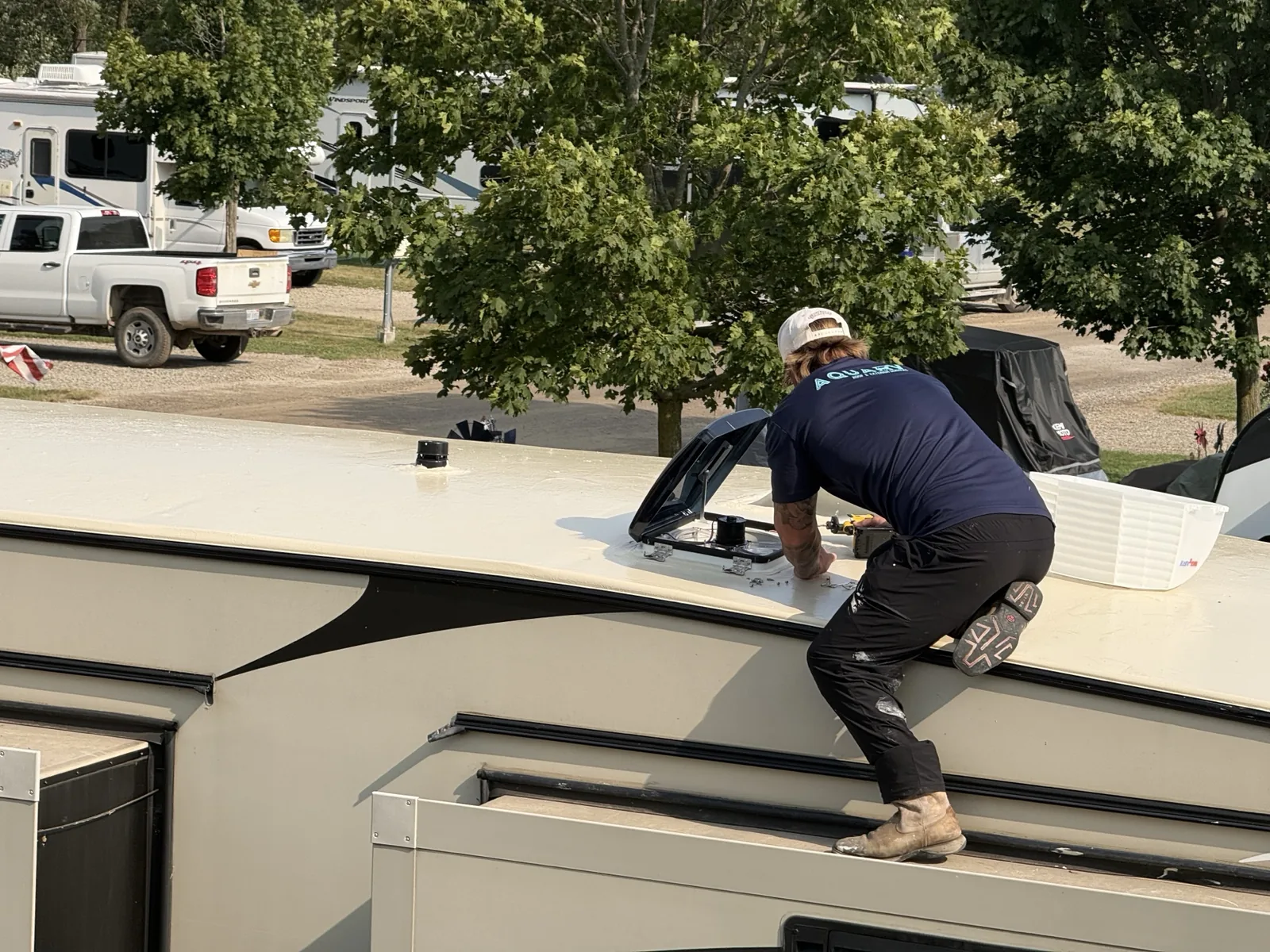
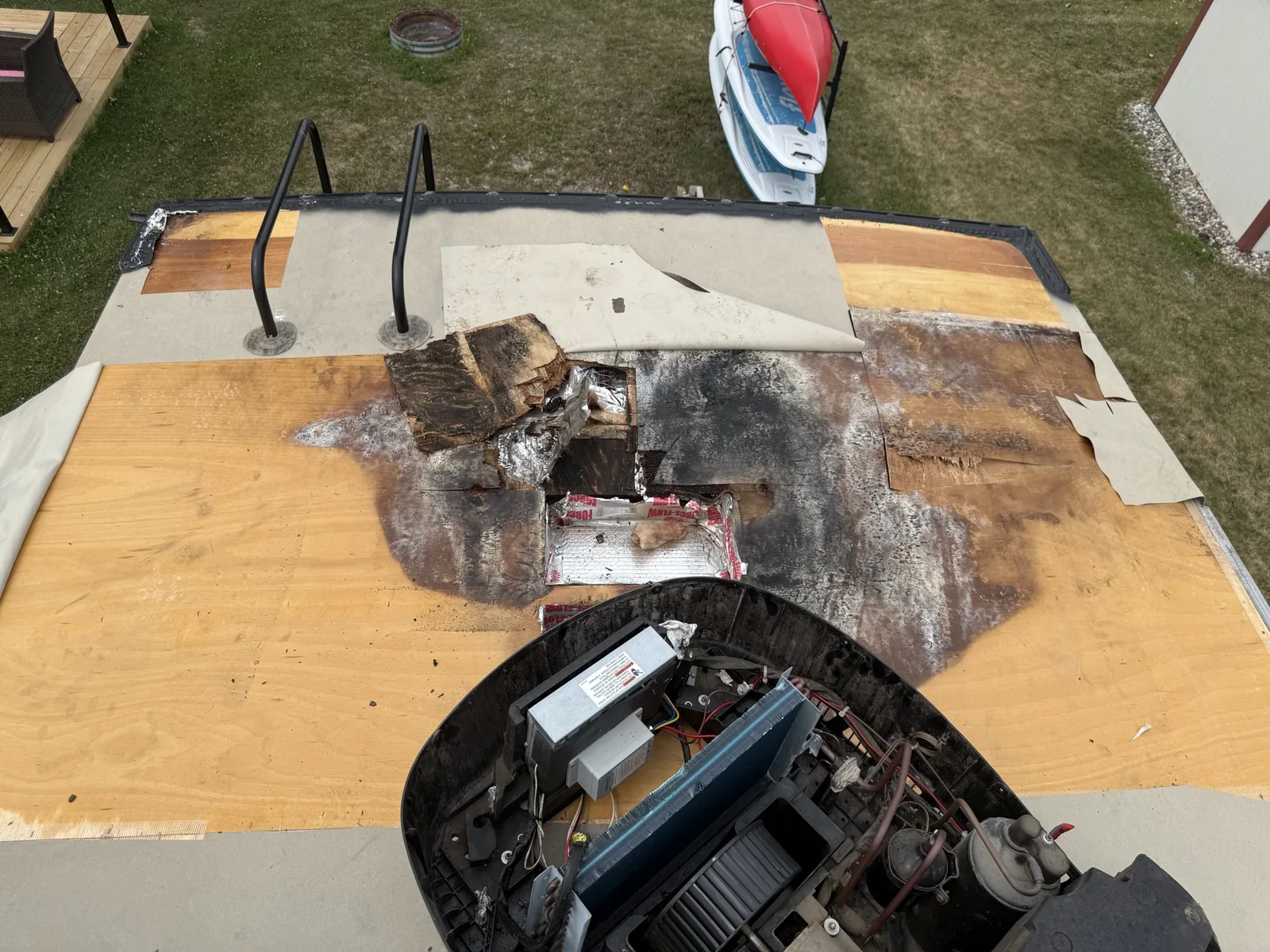
AquaRV Job Photos
Why roof material identification comes first
The same visible symptom can require a different repair depending on the roof system. A tear in a flexible membrane, a crack in a fiberglass surface, and failed sealant around a vent are different conditions even when all three can lead to water intrusion.
Manufacturers publish product-specific instructions because cleaners, primers, adhesives, sealants, and repair membranes are not automatically interchangeable. AquaRV identifies the roof material and evaluates the surrounding condition before recommending the repair approach.
EPDM roof repair considerations
EPDM is a flexible synthetic-rubber roofing membrane used on many RVs. Dicor describes its EPDM system as a membrane used with compatible bonding adhesive and lap sealant, and it publishes dedicated care and retrofit guidance for the material.
Localized tears or damaged areas may be repairable when the surrounding membrane and substrate remain suitable. The repair still needs appropriate cleaning, compatible materials, and attention to the edges of the patch or repaired penetration.
- Check for tears, cuts, lifting, failed sealant, and signs of moisture beneath the membrane.
- Use roof-system-compatible cleaners, patch materials, adhesives, and sealants.
- Do not assume a surface patch is sufficient when the decking underneath is soft or wet.
TPO roof repair considerations
TPO is a thermoplastic roof membrane. Dicor's DiFlex II is one example of an RV TPO membrane and is designed to remain flexible and repairable, but that does not mean every TPO roof should be treated identically.
The RV manufacturer, roof membrane manufacturer, model year, and existing repair products can affect which sealant, primer, cleaner, or patch system is appropriate. That is why identifying the material is more useful than simply calling every white RV roof a rubber roof.
Fiberglass roof repair considerations
Fiberglass RV roofs use a composite surface rather than a loose flexible membrane. Depending on the construction, repairs can involve cracks, damaged gelcoat or surface finish, fiberglass reinforcement, roof-edge transitions, and sealant around rooftop components.
Forest River publishes fiberglass roof repair guidance from Crane Composites that describes specialized repair techniques for fiberglass RV roof materials. That is a different repair family from simply bonding a membrane patch over EPDM or TPO.
What affects repair cost and scope
Material type is only one pricing factor. The size and location of the damage, access, failed penetrations, previous repairs, preparation, and whether water has reached decking or interior materials can change the job substantially.
AquaRV provides mobile roof evaluations across Tampa Bay so the repair scope can be based on the specific RV rather than a generic material label alone.
Frequently Asked Questions
How can I tell whether my RV roof is EPDM, TPO, or fiberglass?
The RV year, make, model, owner documentation, membrane markings, roof texture, construction details, and manufacturer information can help identify the roof. When the material is uncertain, AquaRV can evaluate it before recommending repair products.
Can the same lap sealant be used on every RV roof?
Do not assume so. Sealant compatibility depends on the roof system, existing products, and manufacturer guidance. The correct material should be verified before adding sealant or covering an existing repair.
Is fiberglass always better than EPDM or TPO?
No single roof type eliminates maintenance or repair needs. Each construction has different strengths, failure modes, repair methods, and manufacturer requirements. Condition and correct maintenance matter more than choosing a universal winner.
Can AquaRV repair all three roof types?
AquaRV evaluates common RV roof systems and recommends work based on the material and condition found. Some damage can be handled as a localized mobile repair, while deeper structural or specialty composite work may require a different scope.
Primary Sources
Technical statements in this resource were checked against first-party manufacturer guidance.
Service Area & Related Information
AquaRV provides mobile RV roof services across Tampa Bay, including Pinellas, Hillsborough, Pasco, and Manatee counties. The correct recommendation depends on the roof material, prior repairs, and condition found on the specific RV.
Get an Answer for Your RV
Use the guide to understand the options, then let AquaRV evaluate the actual roof condition before repair or coating work is selected.
Request Free Roof Evaluation